
Jewelry care for vintage pearls, antique beads and silver
Good jewelry care for my pieces is simple. Wipe each necklace with a soft cloth after you wear it, clean it only with warm water and a few drops of mild dish soap, keep it away from chemicals and ultrasonic cleaners, and store it on its own in a soft pouch. Each material below has its own details.
Each necklace is assembled by hand in Montréal, predominantly from antique, vintage and recycled treasures I have collected since 1978, and each material asks for something different. Time has lent many of them a patina and soulful imperfections. This guide gives you the care for each material, with the source for every method, so a piece can be worn for many years and then, one day, reimagined.
How to clean jewelry at home, gently
For most pieces, a soft cloth after you wear them is all the care they need. When a necklace needs more, the Gemological Institute of America (GIA) recommends warm water with a few drops of mild dish soap and a soft toothbrush kept only for jewelry, used gently on older pieces. (source: GIA)
Keep chlorine, bleach and household cleaners away from your jewelry, along with anything abrasive, such as metal polish or toothpaste. Many gems can be damaged in an ultrasonic cleaner, so never use one on these pieces.
Pearls, coral and turquoise are softer and more porous, and GIA advises keeping them away from any chemicals. They each have their own section below.
Caring for vintage pearls
My necklaces use vintage freshwater pearls, baroque and coin pearls, Keshi pearls and rare old stock, chosen for their character rather than their uniformity. For me, the less perfect, the better. Pearls of Peace, for one, is strung with old stock pearls that embrace the beauty found in imperfection.
How to clean pearls
Wipe your pearls with a soft, clean cloth each time you take them off. For an occasional thorough clean, GIA considers warm, soapy water safe; then make sure the string is completely dry before you wear it again. Never put pearls in an ultrasonic or steam cleaner. (source: GIA)
Pearls are damaged by acids and by many chemicals, including hair spray, perfume, cosmetics and perspiration, and high heat can discolor or crack them. Put your pearls on after your perfume and hair spray, and wipe them after a warm day.
How to store pearls
Keep each pearl necklace in its own soft pouch or case, and away from dry, hot places. GIA notes that the silk a strand is knotted on can darken, stretch or wear thin, so a necklace you wear often may need restringing from time to time. (source: GIA)
Most pearl strands are knotted between each pearl, so if a string breaks, you lose one pearl, not the necklace. If yours needs restringing, write to me.
How to tell if pearls are real
Real pearls grow inside a mollusc. GIA divides them into natural pearls, which grew without human help, and cultured pearls, which grew after a nucleus was placed in the mollusc; both are real pearls. Imitations are another material made to look like pearls, usually plastic, shell or a composite. GIA notes that the vast majority of pearls on the market are cultured. (source: GIA) (source: GIA)
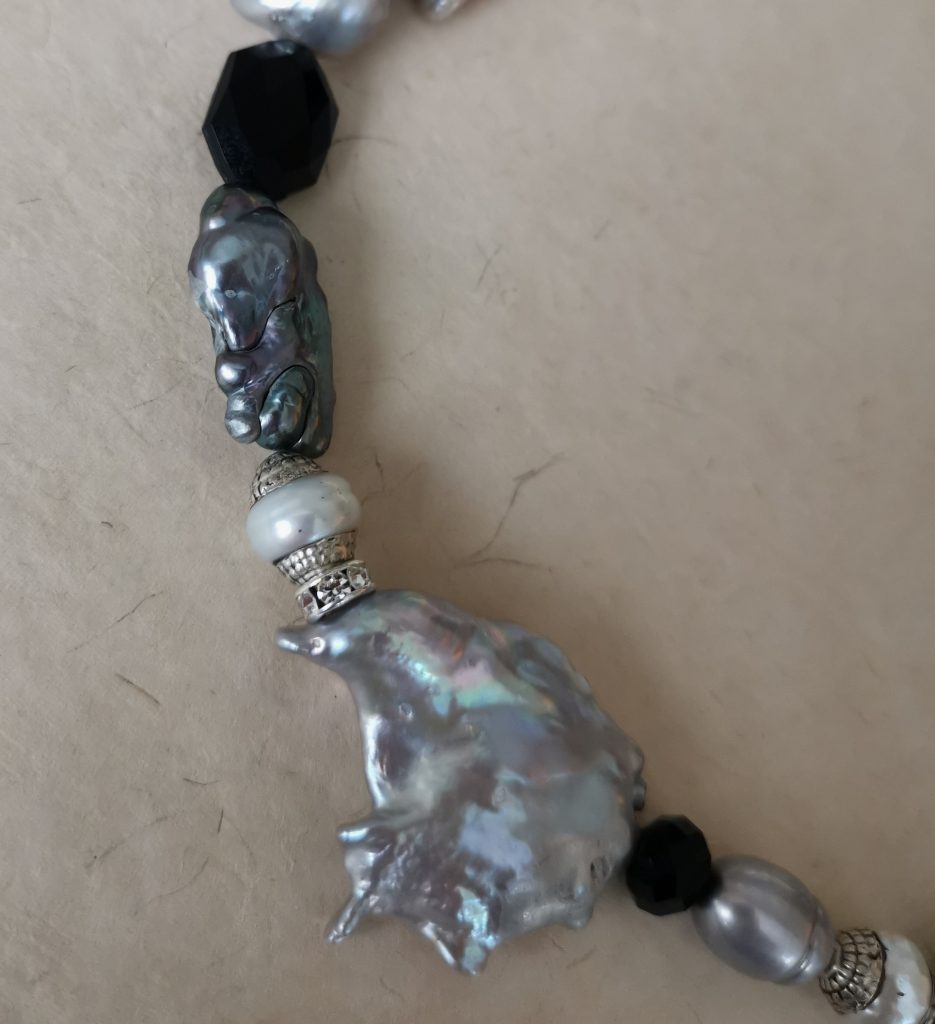
A freshwater pearl grows in a freshwater mussel, in the wild or on a pearl farm, and GIA’s research describes how farmed freshwater pearls are cultured, mostly in China. Either way it is a genuine pearl. (source: GIA) The freshwater pearls in my Never a 51 State collection are vintage.
GIA tells natural and cultured pearls apart in its laboratory, looking inside each pearl with X-rays and measuring its nacre. I describe every pearl by what I know of it, and when its age is uncertain, I say so. (source: GIA)
Coral, turquoise and jade
Coral
I do not purchase any new coral, only vintage or older, as in Our North Star with its vintage barrel coral. Coral is soft and porous. GIA advises storing it in its own cloth pouch, keeping it away from chlorinated water, heat, cosmetics and perfume, and cleaning it with a soft cloth and a brief rinse in warm, soapy water, never a soak, an ultrasonic or a steam cleaner. (source: GIA)
Turquoise
Nest of Dreams sets six rare vintage turquoise beads among Berber and Afghan metal beads. As these are natural stones, they are imperfect. GIA notes that chemicals, cosmetics, skin oils and sweat can discolor turquoise and high heat can damage it; warm, soapy water is safe, steam and ultrasonic cleaners are not. (source: GIA)
Jade
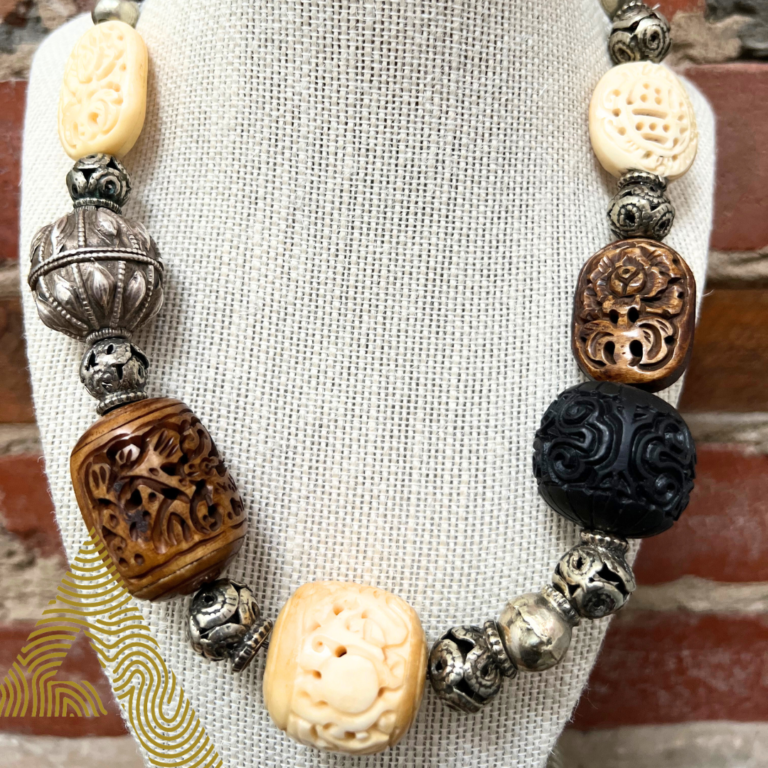
Earthly Beauty carries carved jade among bone, agate and coral beads. Jade is tough, but it can scratch, and it may be treated by dyeing, bleaching, impregnation or coating, so GIA recommends warm, soapy water as the safe clean. (source: GIA)
Caring for antique and reclaimed silver
Many of my components are silver: an antique pure silver bead from Yemen in Biodiversity, Southern Cross pendants forged 100 to 200 years ago, Afghan and Berber silver beads. Time has given them a patina, so polish rarely and gently.
The Canadian Conservation Institute’s advice for silver suits them well: wash with a mild detergent, rinse and dry with a soft cloth. Every polish or chemical dip removes some of the silver along with the tarnish, so prevent tarnish rather than remove it often. Store each piece wrapped, in a sealed bag, with an anti-tarnish cloth. (source: Canadian Conservation Institute)
Metals and allergies
The metal content of antique and vintage components cannot be guaranteed, so I cannot call my jewelry hypoallergenic. If you have a metal allergy, tell me before you order, and I will tell you what I know of each component in the piece, or suggest one that suits you better.
Necklace lengths and fit
Pearl guides call a necklace of about 14 to 16 inches a choker and about 17 to 19 inches a princess length; the exact ranges vary by an inch or two between sources. (source: Pearl Paradise)
The necklaces featured in my collections run from 16 to 18 inches, most of them 17. Each product page gives its length. If you want it shorter or longer, a length or clasp change is $20 CAD plus materials, and matching earrings are $25 CAD.
Repairs, restringing and redesign
Jewelry made from what already exists can be repaired, restrung and, one day, taken apart and reimagined. If a piece of mine breaks, needs restringing or no longer suits you, write to me. A redesign begins with a private consultation by appointment, and nothing is taken apart until you approve the new design.
Jewelry care questions
Is dish soap safe for cleaning jewelry?
A few drops of mild dish soap in warm water is the gentle clean GIA recommends for most jewelry, with a soft toothbrush kept for the purpose. Avoid chlorine, bleach, ammonia cleaners and abrasives, and keep pearls, coral and turquoise away from any chemicals.
How do I clean and store pearls?
Wipe pearls with a soft cloth after each wearing and use warm, soapy water only for an occasional thorough clean, letting the string dry fully. Store them in a soft pouch or case, away from dry and hot places. Never use an ultrasonic or steam cleaner.
How can I tell if pearls are real?
GIA identifies pearls in its laboratory, looking inside them with X-rays and examining their surface and nacre. Natural and cultured pearls are both real pearls; imitations are plastic, shell or composite.
Do real pearls float or sink?
A float test is not one of the methods GIA describes; its laboratory identifies pearls with X-rays and by examining the surface and nacre.
Is a freshwater pearl a genuine pearl?
Yes. A freshwater pearl grows in a freshwater mussel, in the wild or on a pearl farm, and GIA counts both natural and cultured pearls as real pearls.
How can you tell if a jade necklace is real?
Jade may be treated by dyeing, bleaching, impregnation or coating, and treatments can be hard to see; ask for a gem laboratory report if you need certainty.
What is the standard length for necklaces?
Most pearl and necklace guides put a princess length at about 17 to 19 inches and a choker at about 14 to 16. The necklaces featured in my collections run from 16 to 18 inches, most of them 17, and a length change is $20 CAD plus materials.
Can you repair or restring a necklace I bought from you?
Yes. Write to me with a photo of the piece and what has happened, and I will tell you what it needs before any work begins.